Designing AI Agent Systems for Automotive Supply Chain Operations
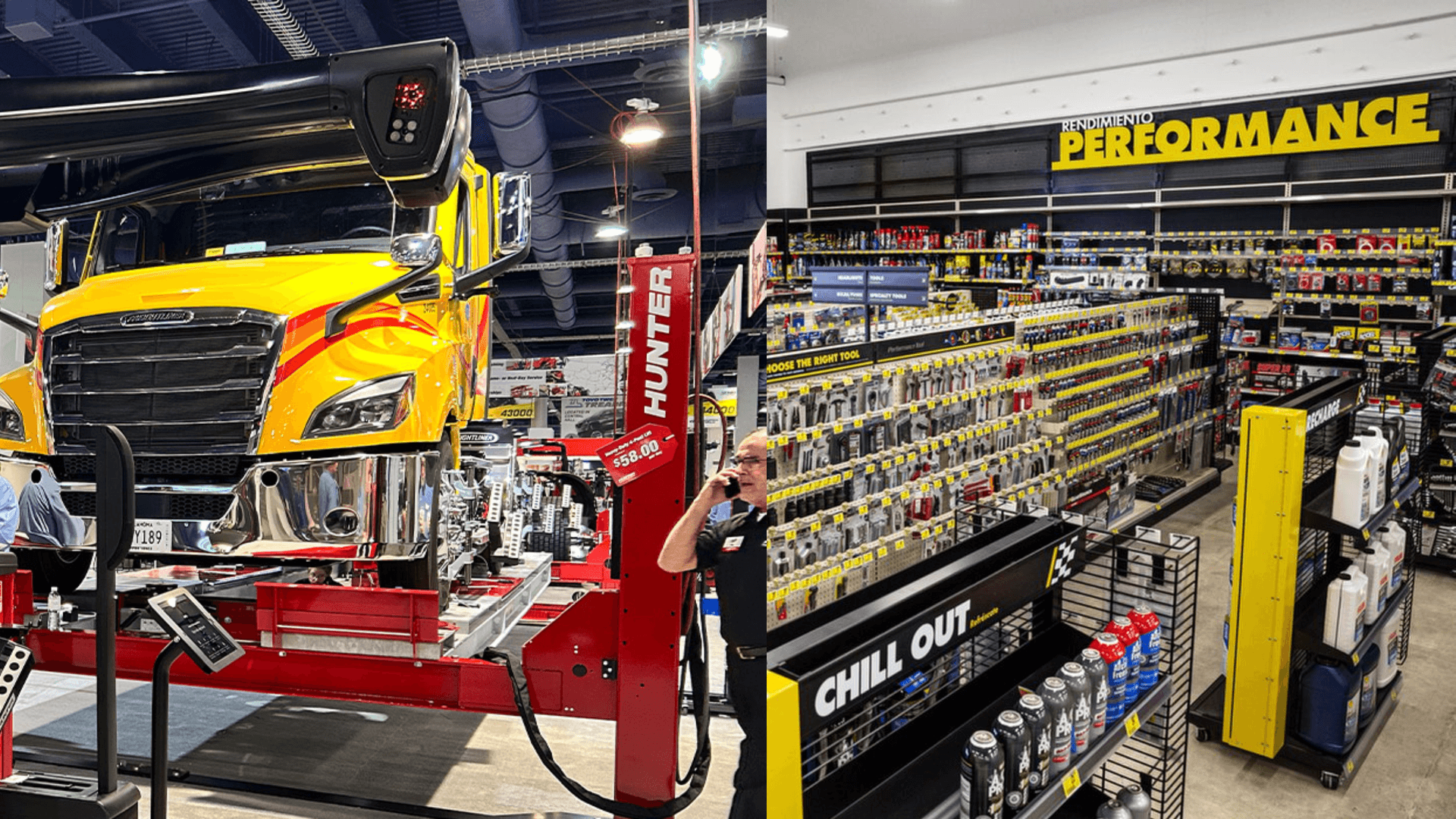
Exploring how autonomous AI systems can address operational friction in the automotive industry.
December 12, 2025 · Henry Osterweis
1. The Challenge
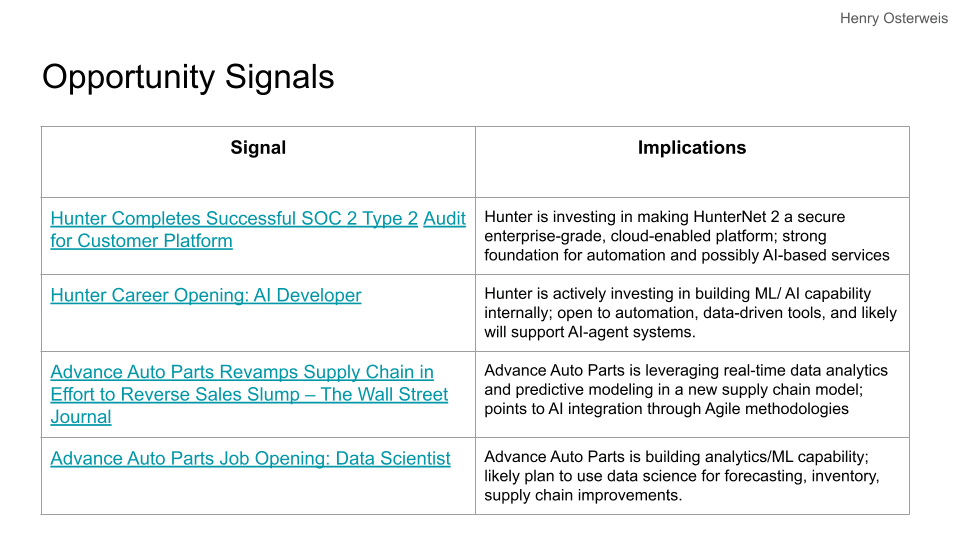
Equipment manufacturers and parts distributors face automation gaps that cost time and money.
2. Hunter Engineering
Connected equipment generates alerts, but manual processes delay service response.
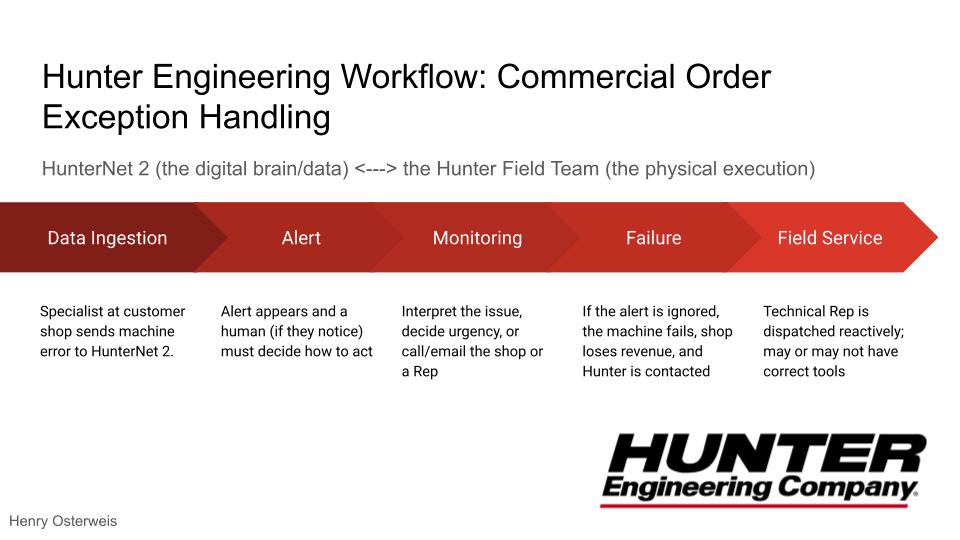
Current workflow: alerts ignored until failure, manual technician coordination
3. Advance Auto Parts
Out-of-stock exceptions require manual resolution while customers wait.
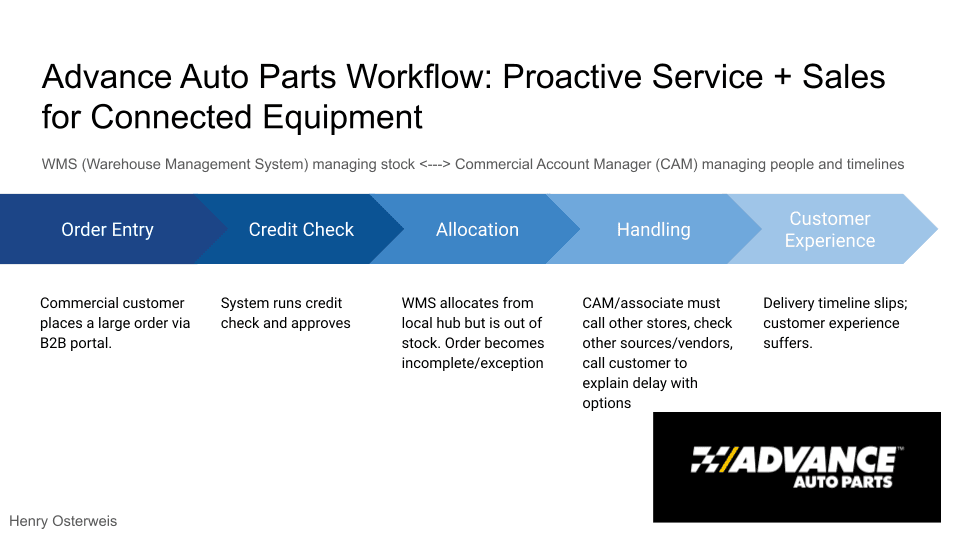
Current workflow: managers manually search inventory, call vendors, update customers
4. Proposed Agents
Four AI agents designed to automate judgment-based tasks.
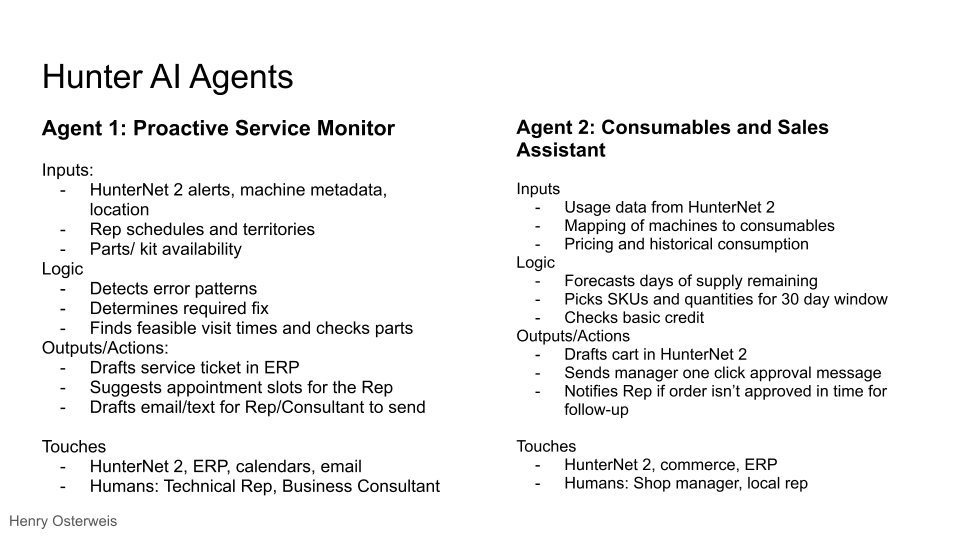
Hunter: Proactive Service Monitor + Consumables Sales Assistant
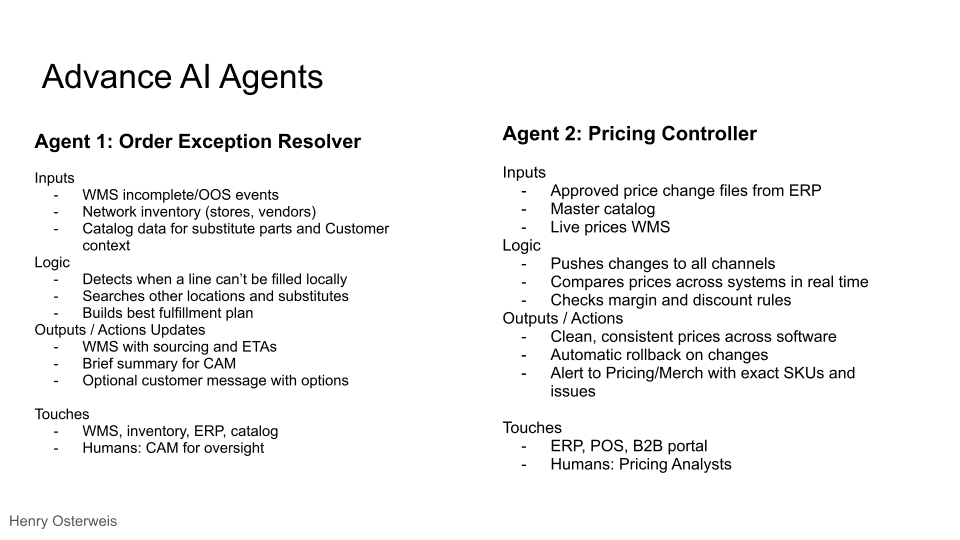
Advance: Order Exception Resolver + Pricing Controller
5. Technical Approach
Phased rollout, data standardization, atomic operations.
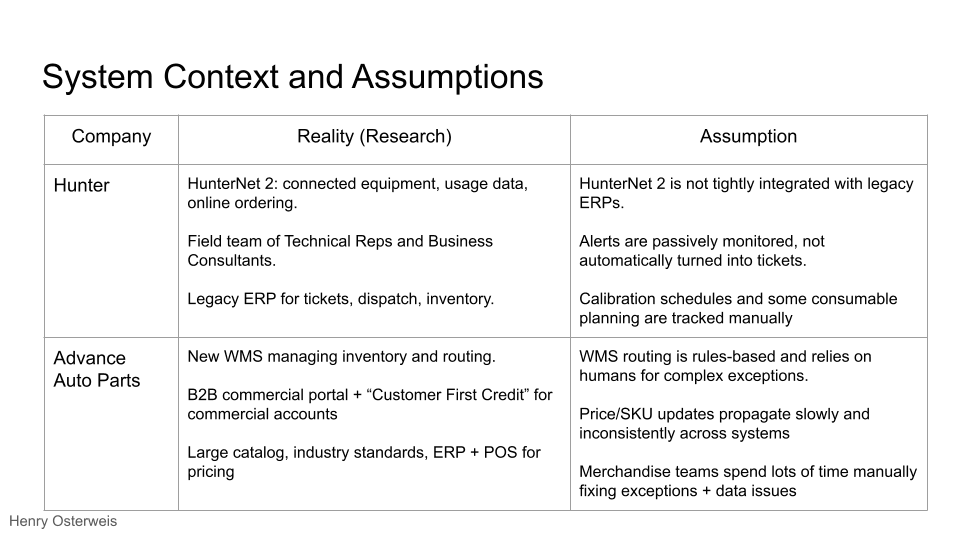
Technology stack assumptions and integration points
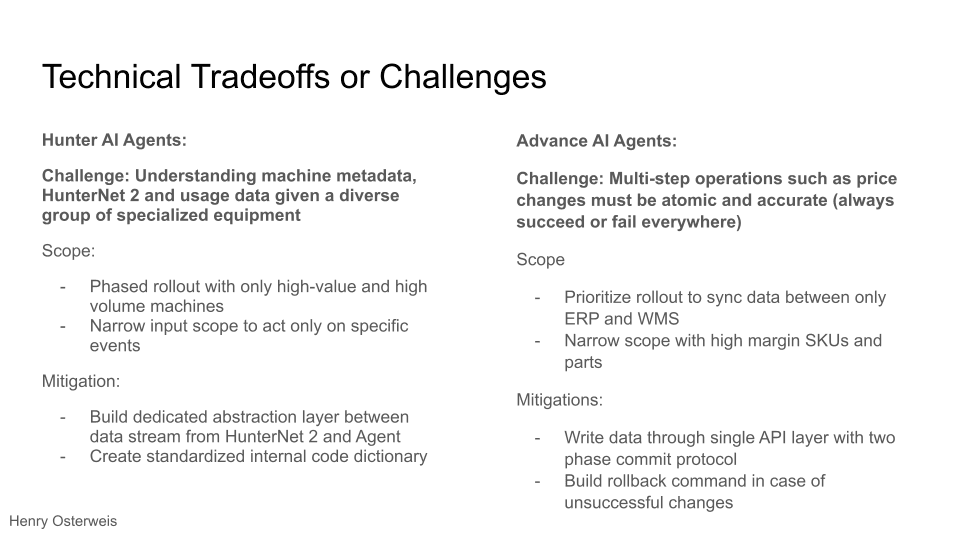
Key challenges and mitigation strategies
6. Prioritization
Start with high-value, low-complexity agents to prove ROI.
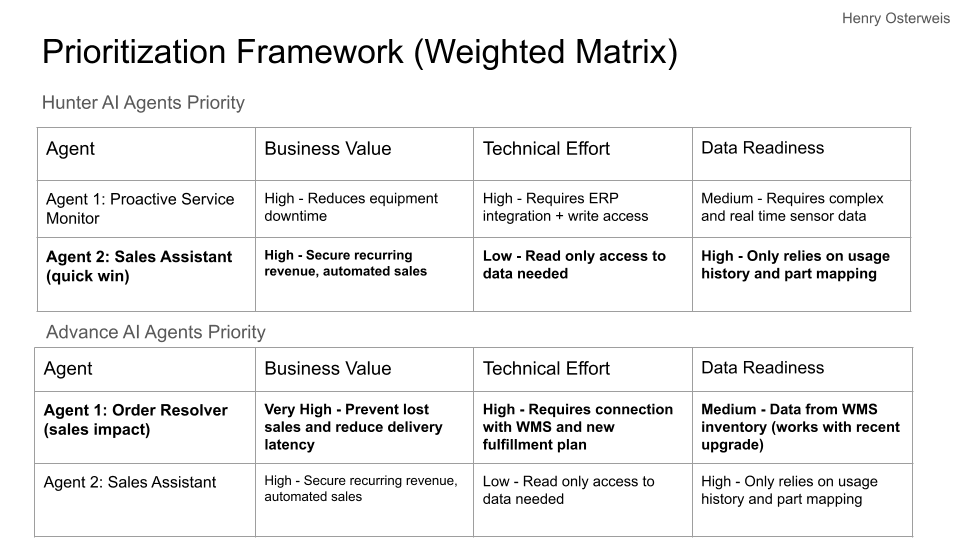
Scoring by business value, technical effort, and data readiness
7. Expansion
Each successful agent enables the next.
Future agents: predictive maintenance, demand forecasting, dynamic pricing
Want the complete breakdown?
Read the full case study →