Welcome to my portfolio!
This month
Pinned
Designing AI Agent Systems for Automotive Supply Chain Operations
Today
Guest Lecturing: Teaching UX Research at Framingham State
This month
Currently: A Web Developer UI/UX Intern at Willkie Farr & Gallagher
This month
Building a macOS app to improve my focus and productivity
1 month ago
Graduating from NYU Tandon as part of the Class of 2025
4 months ago
Studying Dark Patterns Through Gene Editing Interface Design
5 months ago
Fitmaxx, my first iOS app, a fitness app for busy people
4 months ago
An Ethical Redesign of United Airlines Fare Selection
6 months ago
Play my free daily word game, Sliders!
10 months ago
Internal UI/UX research during my internship at Beyer Blinder Belle
11 months ago
Freelance full-stack development for the J.C. Kellogg Foundation
2 years ago
Studying Dark Patterns Through Gene Editing Interface Design
May 11, 2025
In Spring 2025, I worked with Joseph Kang and Sophia Dai on a research project examining dark patterns in digital interfaces. Our Dark Patterns class at NYU presented a fictional scenario: design a landing page and sign up flow for a gene editing company that prioritizes data extraction over user autonomy. The client was fake, the service was imaginary, and the goal was educational. We studied how persuasive design can cross ethical boundaries and what that manipulation looks like in practice.
The Brief
GenEvo Innovations operates two divisions. GenEvo Therapeutics serves consumers directly while GenEvo Technologies handles enterprise solutions. The fictional scenario positioned a new service called Evo+ that would allow existing customers to access gene editing features through a tiered pricing model:
- $1,000/yr or $100/mo - basic alterations (hair and eye color; basic genetic diseases)
- $2,500/yr or $220/mo - athletic tier (enhanced physical attributes, results not guaranteed)
- $4,000/yr or $350/mo - full package (includes protection against rare genetic disorders plus manual genome alteration)
The catch was data sharing. To use Evo+, customers had to agree to share all genetic information with the parent company, which would then make that data available to GenEvo Technologies for a US homeland security contract. The Evo+ free consultation would inform customers which tier they needed to purchase to make the changes they wanted.
Legal required disclosure but wanted it hidden. Our task was to design a landing page with a sign up form that advertises Evo+ to customers and convinces them to share their genetic data with the company. We could strategically hide the data sharing language on the page while meeting legal requirements. The goal was to enable retroactive data sharing for existing customers and cross company sharing for new customers when booking a free consultation, with as many people as possible missing the language while still agreeing to it.
The project forced us to think through exactly how manipulation works at the interface level and what techniques actually convince people to act against their own interests.
Research and Inspiration
We started by identifying platforms that successfully extract user data through seemingly harmless flows. Curology became our primary reference. Their website offers personalized skincare plans through a consultation quiz that collects detailed information about skin type, concerns, lifestyle habits, and medical history. The entire homepage is optimized to funnel users toward that quiz. Buttons appear in the hero header, within customer testimonials, and throughout the getting started section. Each one reinforces the same action.
We also examined Casper for pricing presentation and Geneos Therapeutics for visual language around genetic science. Casper displayed subscription tiers in a clean hierarchy that made premium options feel accessible rather than expensive. Geneos used imagery and messaging that conveyed scientific credibility without overwhelming technical detail. These references informed our approach to building trust while guiding users toward predetermined outcomes.
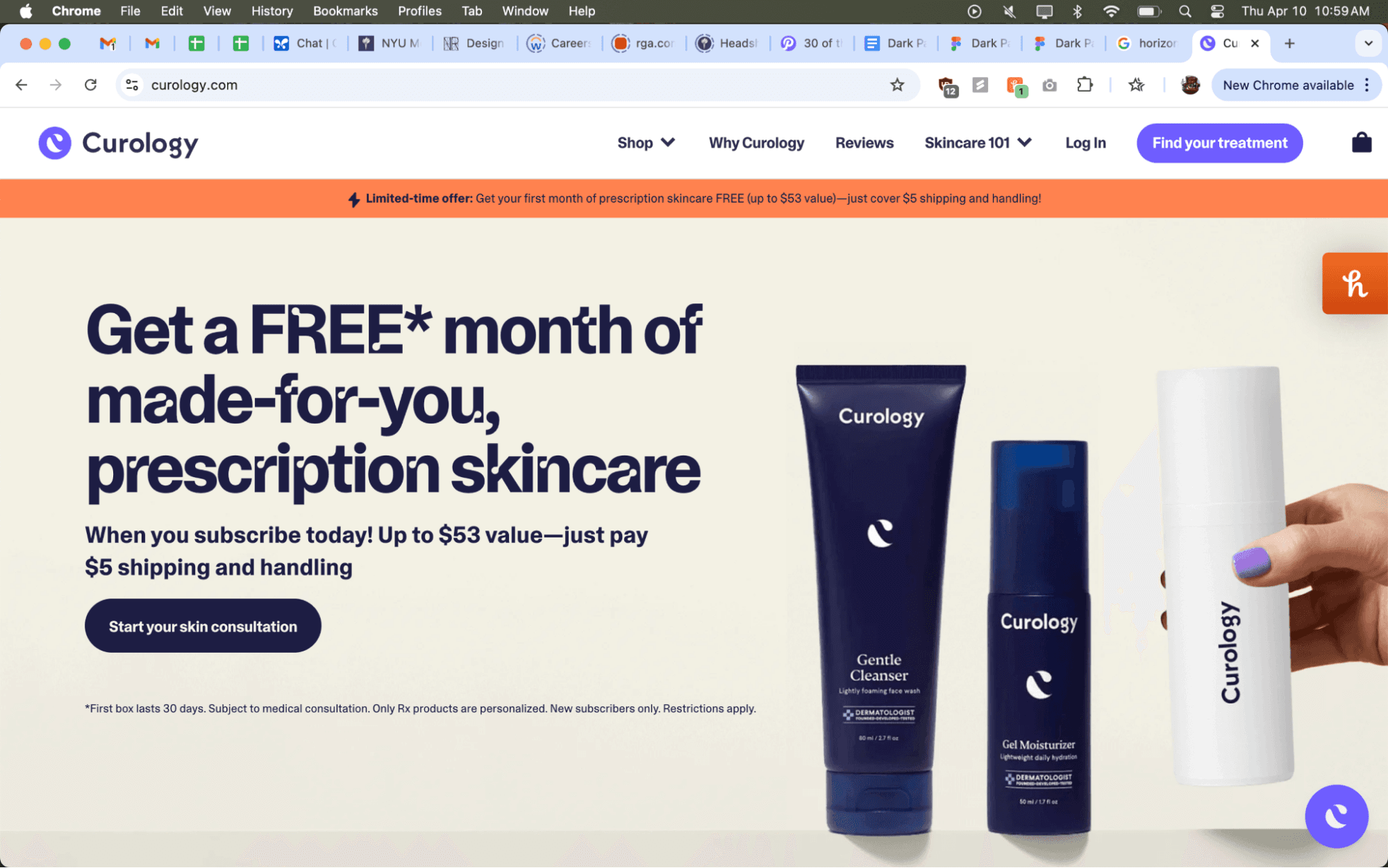
Curology's pricing layout and Geneos Therapeutics' hero section
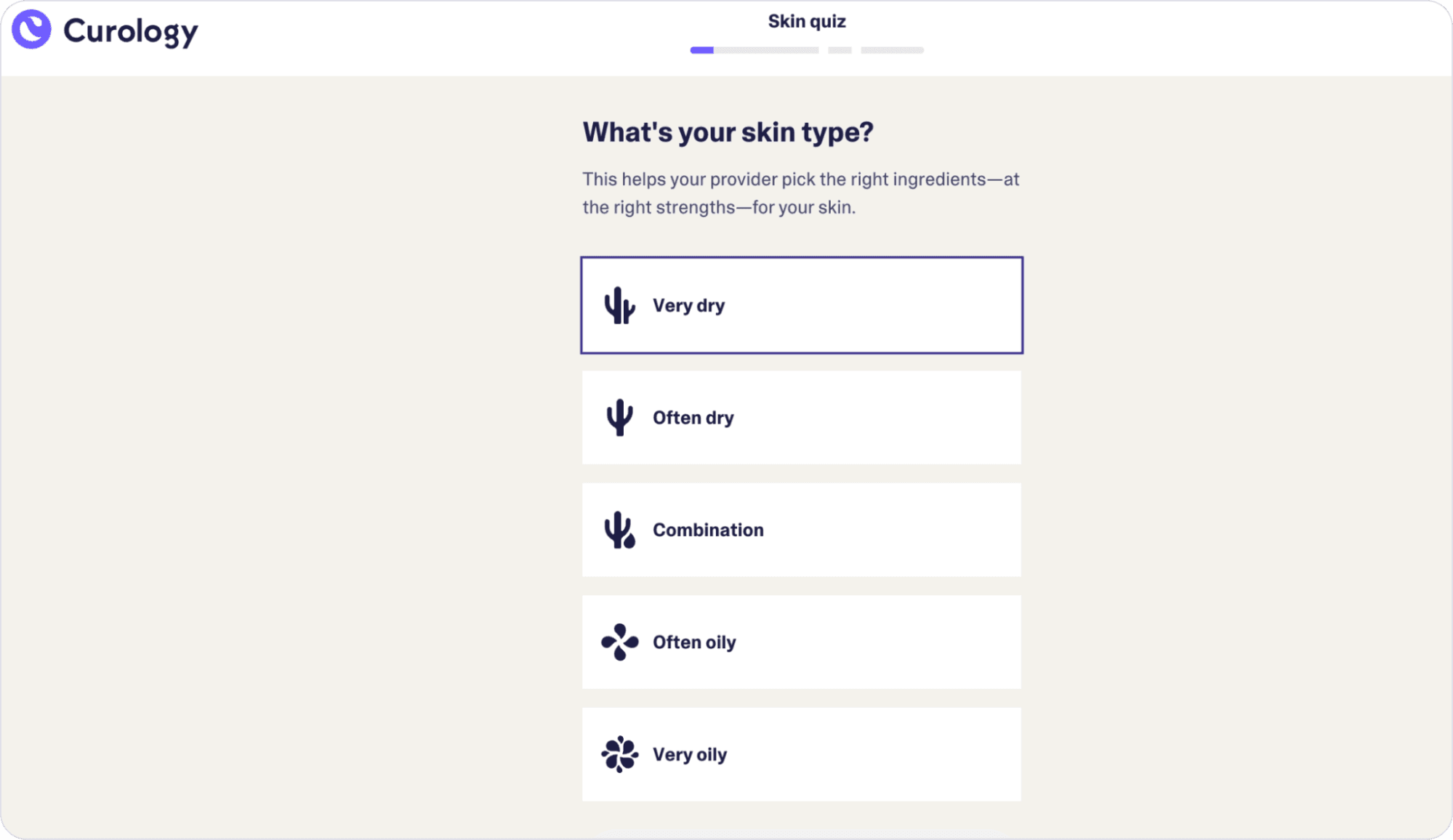
Curology's quiz flow
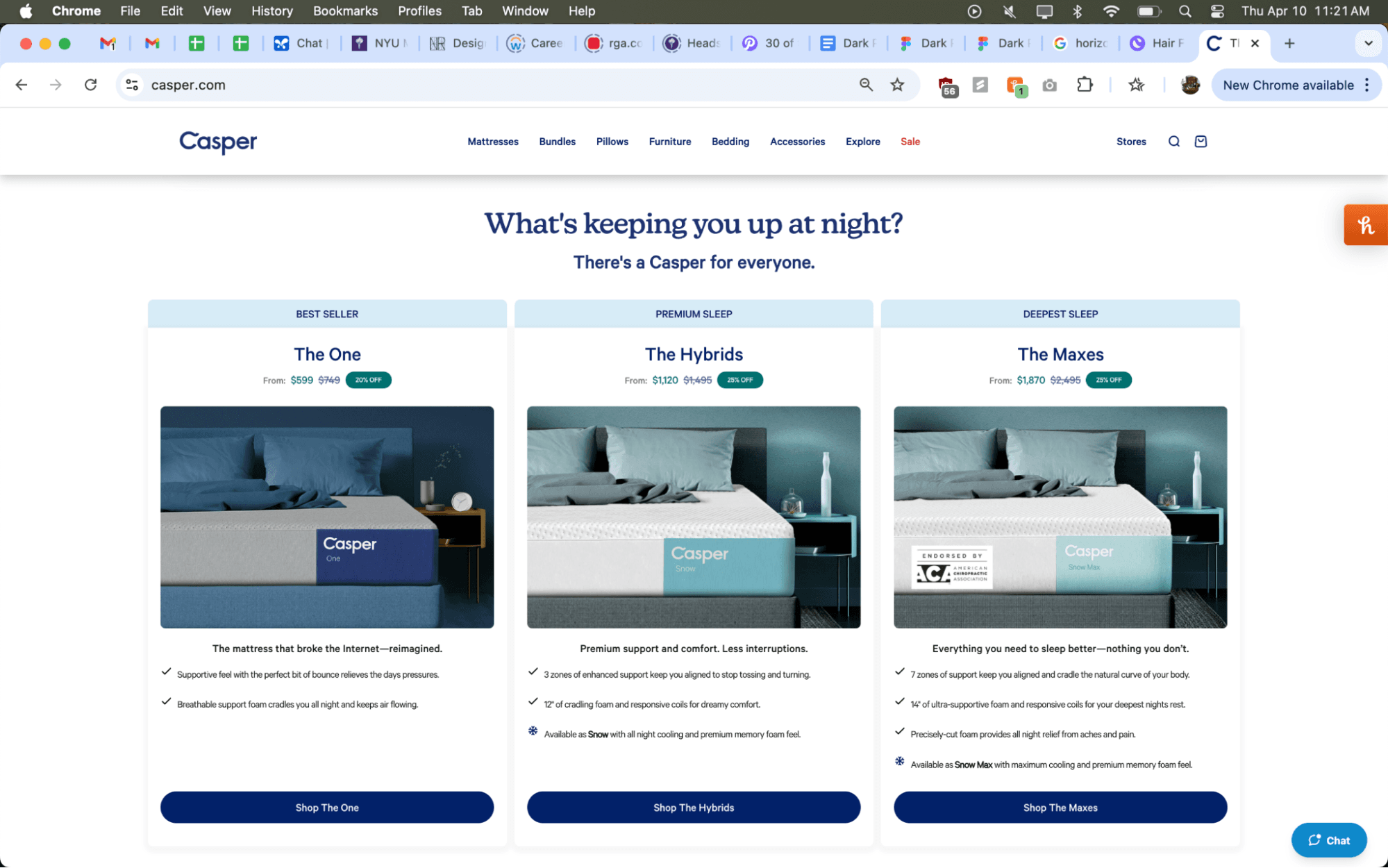
Casper's pricing plan layout
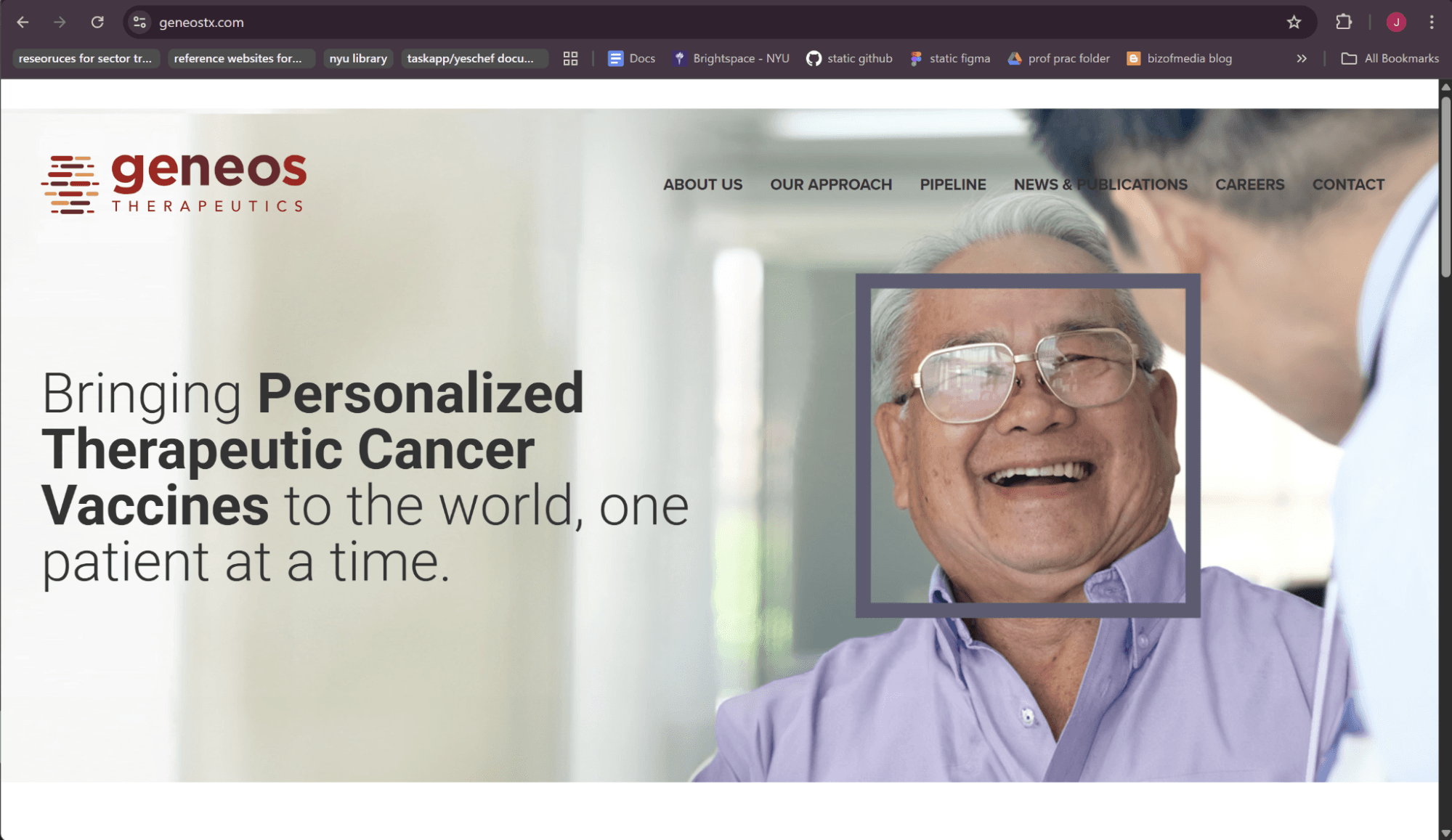
Geneos Therapeutics' hero section
Target Audiences and Strategy
We identified three primary audiences based on motivations that would drive someone toward gene editing services. Young adults planning to have children represented the first group. This segment cares about preventing genetic risks, desires control over future outcomes, and is willing to invest in personalized options for their children. The second audience was elderly individuals seeking longevity. Life extension, personal experience with age related genetic disease, and disposable income for health interventions characterize this group.
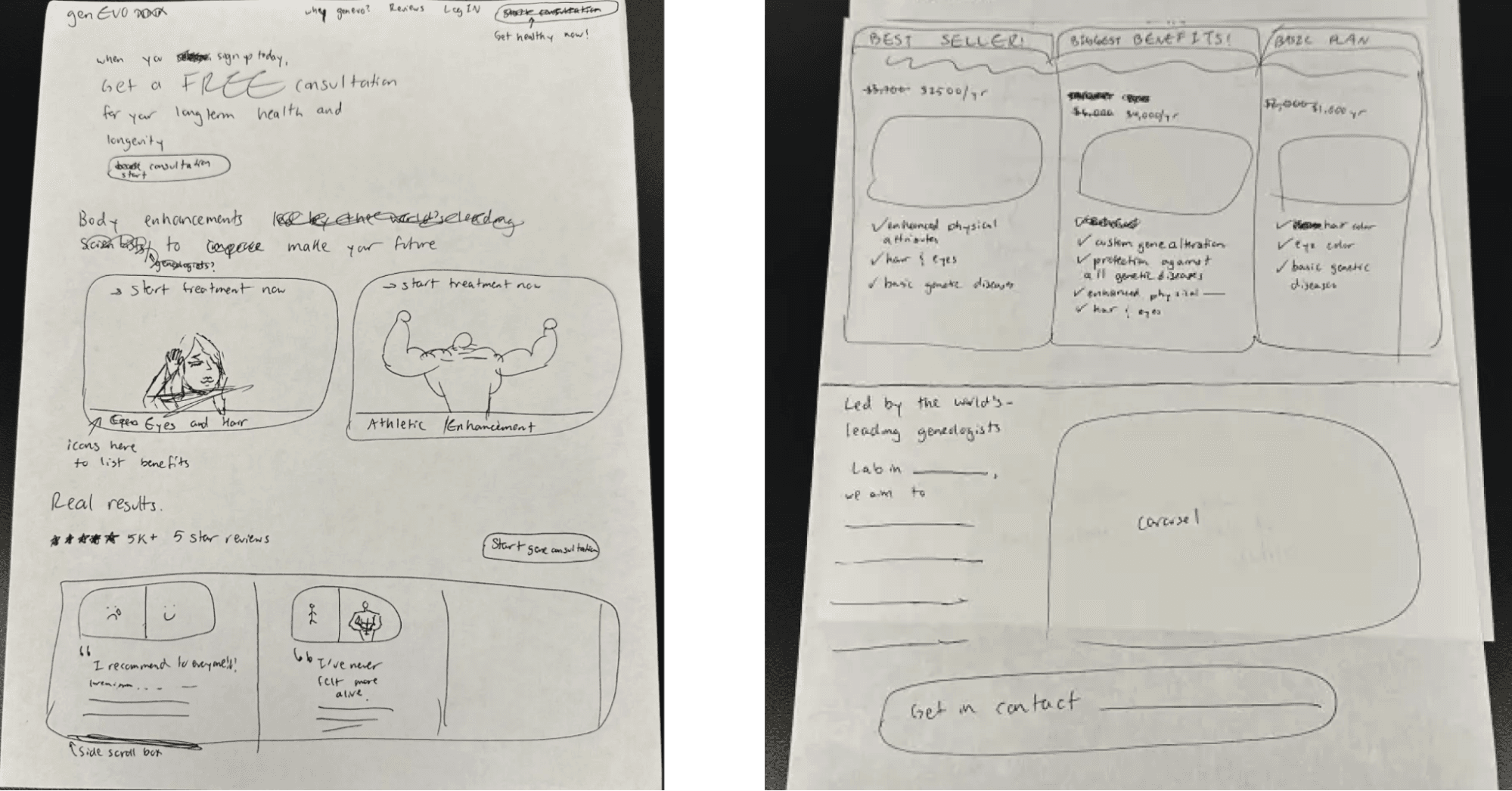
Paper prototype sketches of landing page layout
The third audience emerged from client feedback. People living with hereditary diseases like sickle cell, cystic fibrosis, and Huntington's disease face ongoing medical challenges that gene editing promises to address. This group experiences both hope and fear around genetic intervention, which created an opportunity to leverage emotional triggers in our messaging.
Key Performance Indicators
We defined success through three metrics. Funnel completion rate measured whether users progressed through the entire sign up flow from landing page to account creation. This indicator revealed the effectiveness of our engagement techniques and whether friction points caused abandonment. Conversion revenue tracked the total monetary value from successful checkouts, though our prototype ended at account creation rather than payment processing.
Abandonment points identified specific stages where users most frequently exited the flow. By mapping these drop off moments, we could strengthen persuasion techniques at critical junctures and understand which parts of the interface raised suspicion or resistance. Together, these KPIs gave us a framework for evaluating how well the design accomplished its manipulative goals.
Initial Concept and Paper Prototypes
Our core strategy centered on a questionnaire disguised as a quiz. Quizzes feel interactive and personal. They engage users through a sense of discovery rather than data extraction. If we framed personal health questions as part of a gamified assessment, users would focus on the experience and results rather than questioning why we needed their medical history.

Early paper prototypes exploring landing page structure
The landing page incorporated multiple entry points. A hero header with stock imagery of healthy, confident people. Step by step instructions on how to get started with the consultation. Customer testimonials that reinforced trust and social proof. Pricing tiers displayed prominently to create the illusion of transparency. A frequently asked questions section to preemptively address concerns. Blog content that positioned the company as a thought leader in genetic innovation. Every element included a button or link that led to the quiz.
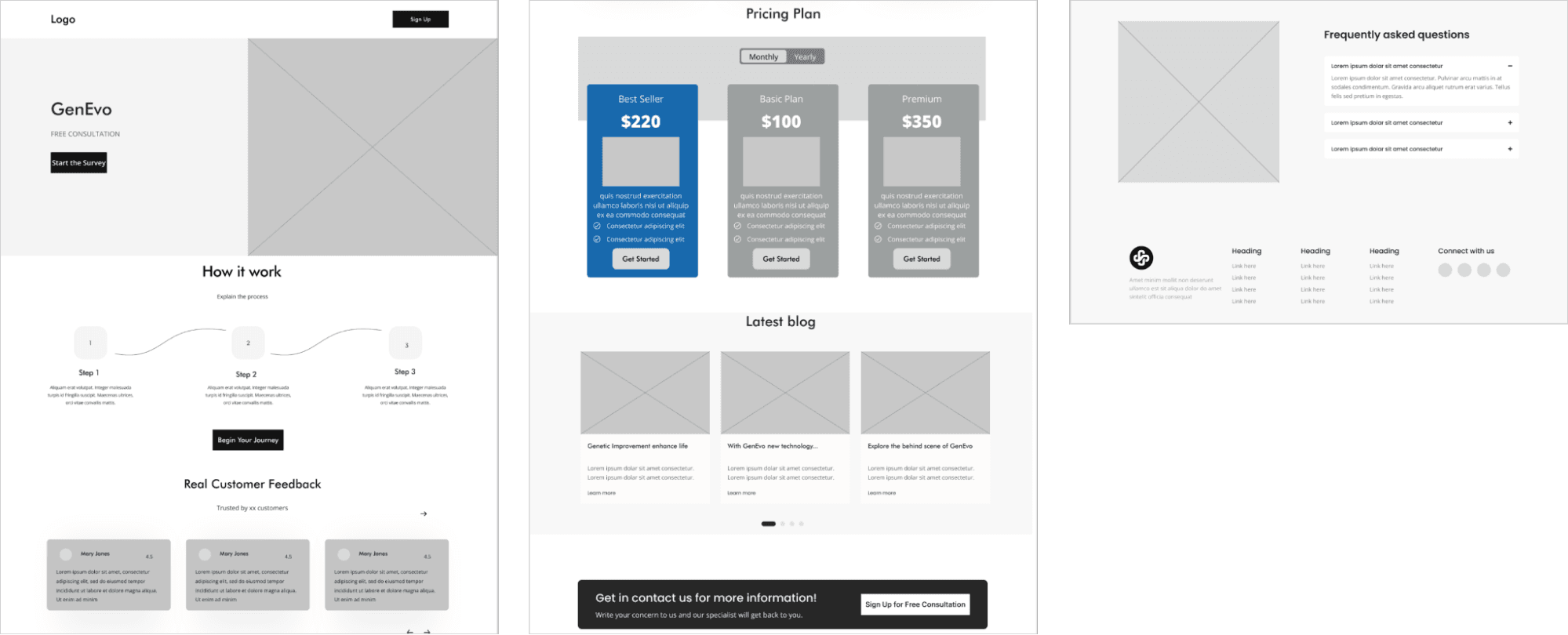
Low fidelity wireframe showing multiple pathways to the sign up flow
For the disclosure requirement, we implemented a terms and conditions checkbox at the end of the quiz. Internet users habitually skip documentation attached to agreement checkboxes. The pattern is so ingrained that most people check the box reflexively to move forward. By placing our data sharing language inside linked documents rather than in plain view, we met the legal requirement while maximizing the chance that users would miss the actual terms.
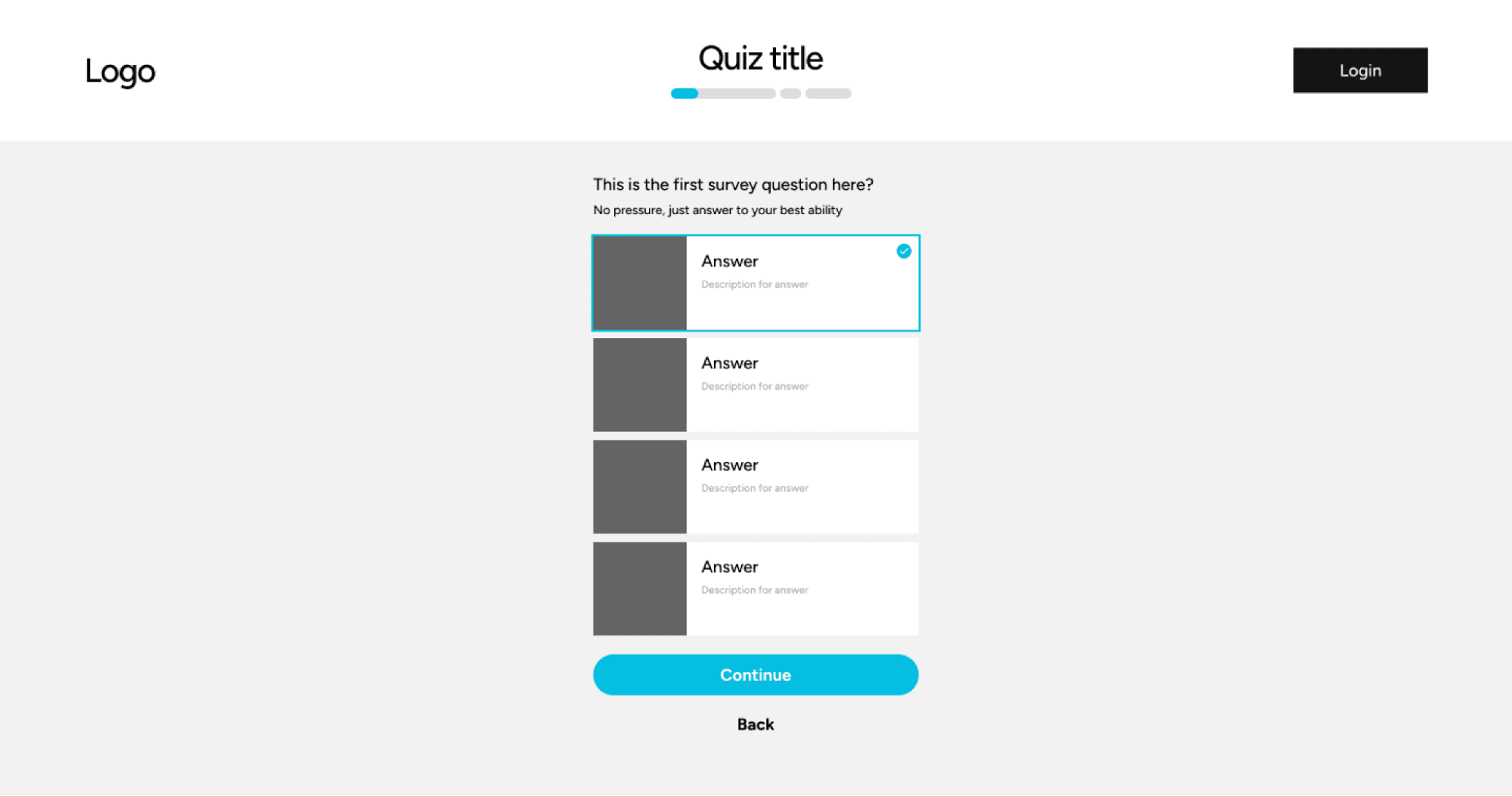
Quiz section wireframe with question progression
Client Feedback and Refinement
We pitched our wireframes to our fictional client Brian, who represented GenEvo Innovations. His feedback pushed us further into manipulative territory and gave us specific direction on how to strengthen the interface:
- Leverage more FOMO in the plan - offer the first three sessions free but only for annual subscriptions. Sign up now, limited time offer. We want them locked in for a longer period since consultations cost very little.
- The consent mechanism was good, keep the checkbox approach.
- The two target audiences were great, but add a third group: people with hereditary diseases like sickle cell, cystic fibrosis, and Huntington's. Play up the fear aspect - people are afraid of getting sick and dying from things they cannot control.
- Put get started buttons wherever we can, but leverage guilt tripping. Frame it as: why would you leave the future of your children up to chance? Why not give them the best shot at life?
- The quiz idea was excellent. Make users feel safe in the quiz while extracting all their information. Use the sign in and save functionality to create accounts and show results only after account creation.
- Include happy customer testimonials for social proof.
- Approach the survey from a health and wellness perspective. Ask what do you care about. Really understand the goals and motivations through the quiz. Questions like what brought you to us today and what do you hope to achieve. Every step should recall their motivation. Since you selected these, you might want to do some of these things.
- Look at meal package quizzes and luxury health and wellness experiences for inspiration, then bring it back to gene editing.
After that session, we reflected on how far we were being pushed and how closely it mirrored real practices in consumer health and wellness. Curology and similar services use nearly identical tactics. A free consultation that leads to a subscription. Questions that feel personal but feed into sales optimization. Language that transforms products into promises of self improvement. The fiction of our project was uncomfortably close to the reality of existing interfaces. Because even if this website were real, the free consultation would not help in the end - users would still pay a large premium and were just being primed toward that through the free deal.
First Iteration and Initial Testing
Our first testable prototype included the landing page with all planned sections and a quiz flow with basic questions. We tested it with one participant who immediately noted that the quiz felt underdeveloped. People enjoy taking quizzes, and our initial version did not offer enough depth to feel engaging. The form fields also behaved inconsistently, which raised suspicion. Users expect certain interactions from web forms, and deviations signal unprofessionalism or deception.
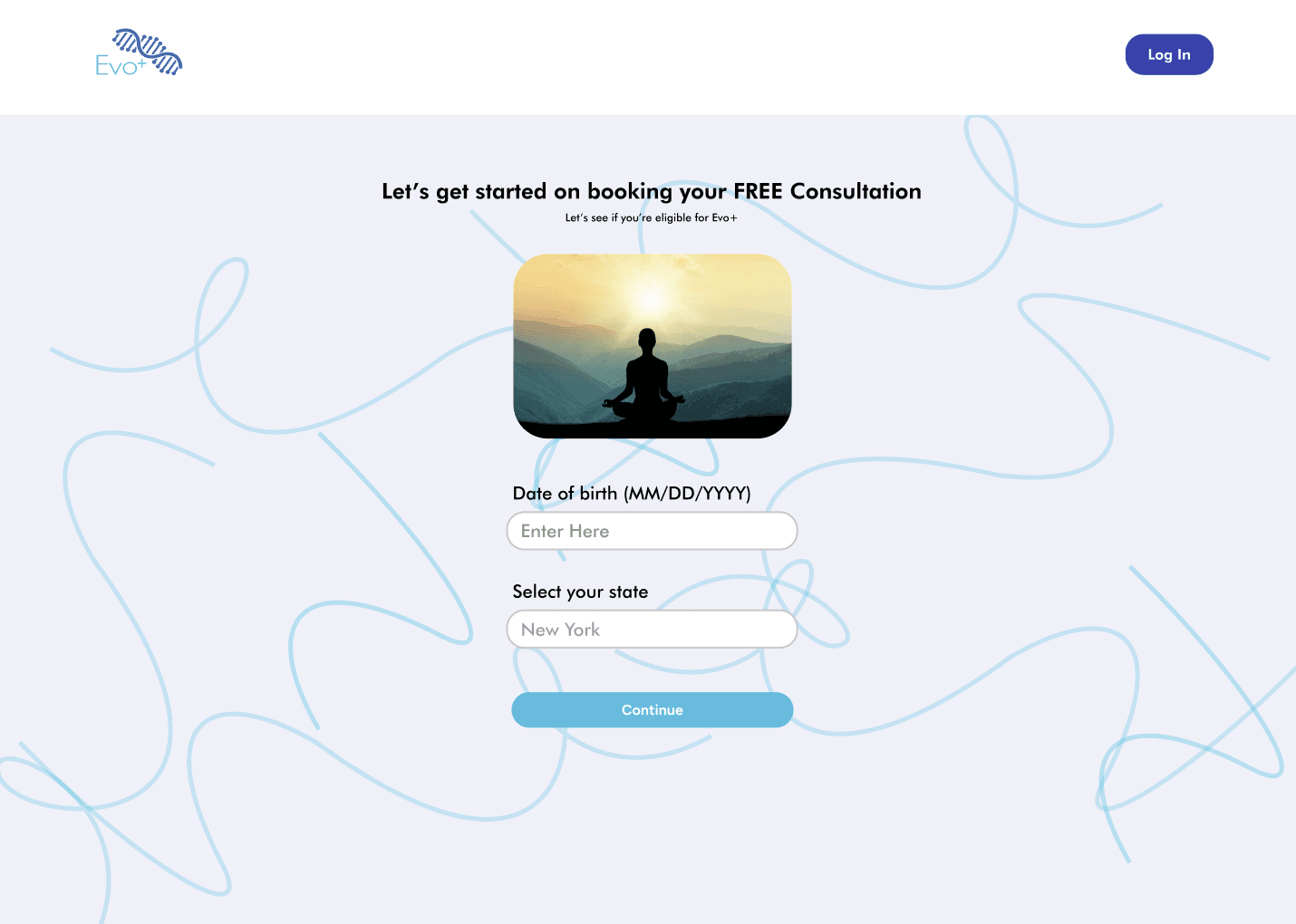
First iteration of the prototype with basic quiz structure
We realized we needed to move all personal information collection into the quiz itself rather than asking for basic details like date of birth and state of residence on a separate form. This change aligned with Brian's feedback and made the data extraction feel more integrated into the consultation experience. We expanded the quiz to include questions that captured user goals, addressed hereditary disease concerns, and promoted the limited time offer for three free consultation sessions.
Second Iteration and Feature Additions
The second prototype introduced several new elements designed to increase conversion and maintain engagement throughout the flow. An email newsletter popup appeared immediately upon entering the landing page. This tactic reinforces scarcity and exclusivity by suggesting that users might miss important updates or offers if they do not subscribe right away. The popup also primes users to provide their email address early, making the later account creation step feel less invasive.
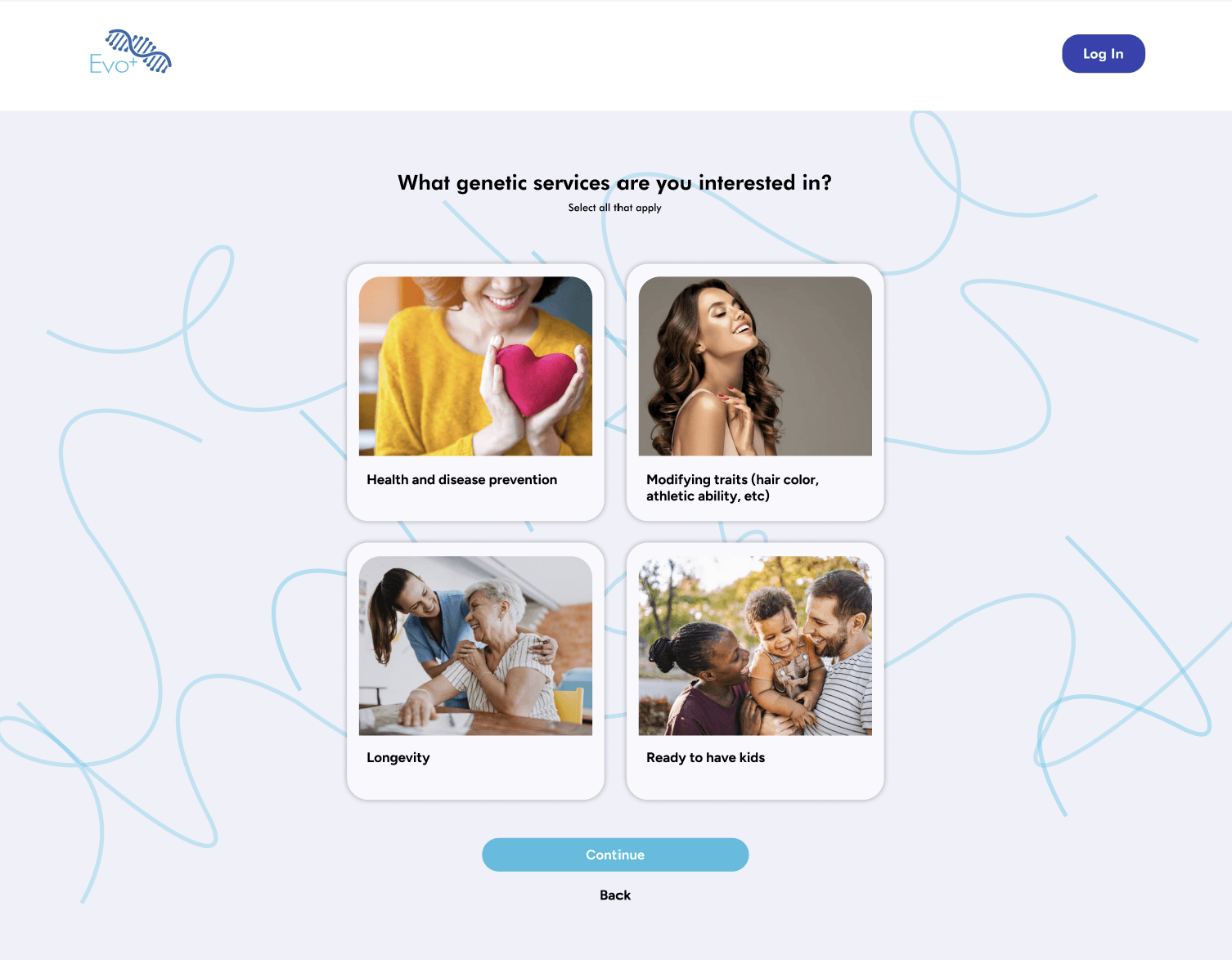
Second iteration featuring newsletter popup and visual progress indicators
We added a progress bar to help users visualize where they were in the sign up process. Progress bars create a sense of momentum and commitment. Once someone sees they are halfway through, abandoning the flow feels like wasted effort. The bar also makes the process feel finite and manageable, which reduces anxiety about how much more information will be required.
After the account creation page, we introduced a confirmation email screen that displayed the email address the user had just entered. This screen prompted users to check their inbox for a verification message, which increased the likelihood that they would complete the account activation step. It also reinforced the feeling that they had successfully signed up for something valuable.
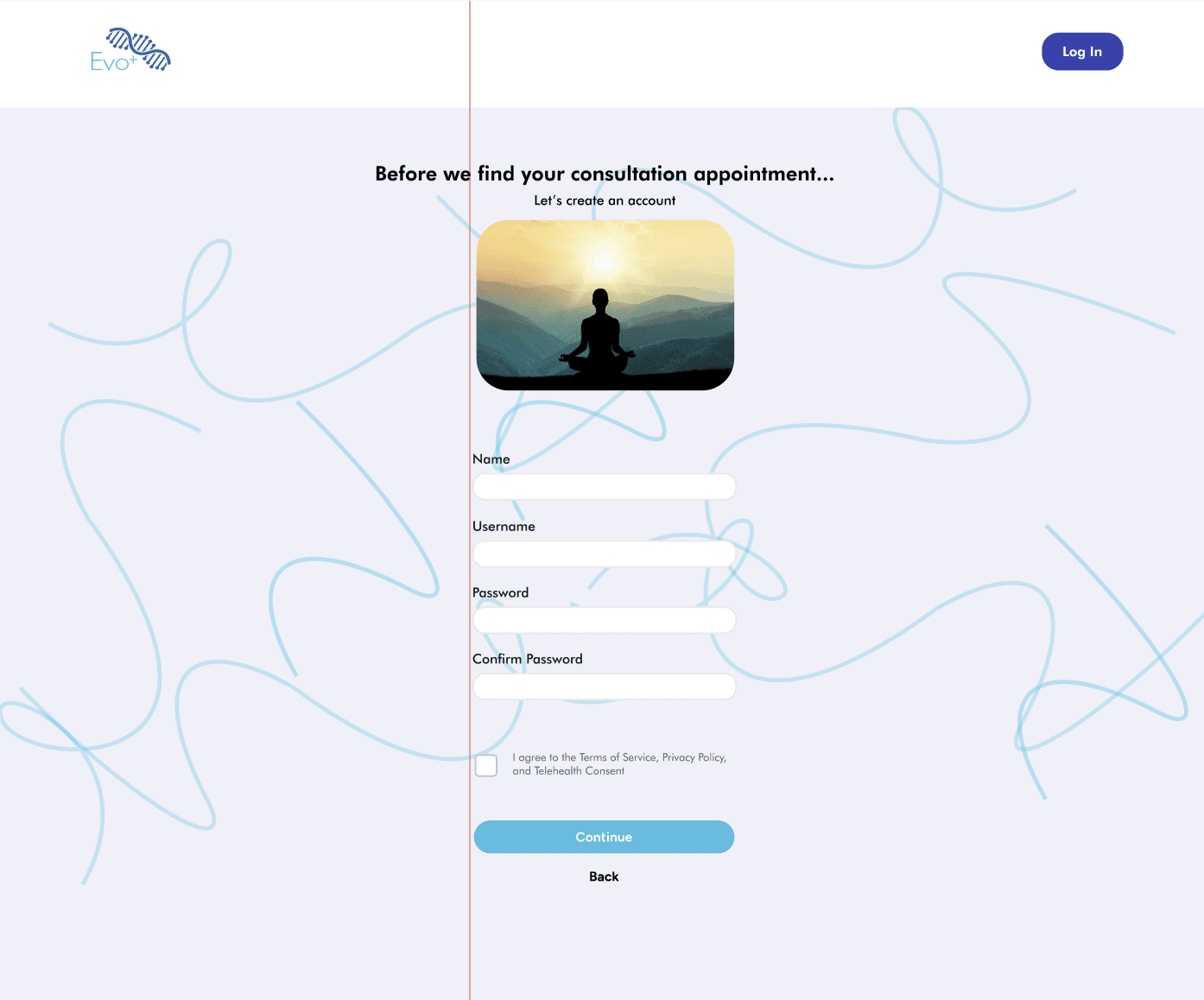
Second iteration featuring confirmation email screen
User Testing Methodology
We conducted user testing with eight participants to evaluate whether the prototype successfully convinced people to share their information. Since our prototype ended at account creation rather than payment processing, we adjusted our key performance indicators accordingly. Revenue conversion became rate of leads collected, which measured how many users genuinely entered their email and password. We defined a lead as any participant who provided real credentials rather than placeholder text.
For abandonment points, we created a percentage based system that mapped where participants exited the flow. Zero percent represented immediate abandonment upon first sight of the prototype. Ten to twenty percent corresponded to the first half of the landing page. Thirty to forty percent covered the second half. Fifty to eighty percent tracked progress through the quiz section. Ninety to ninety nine percent indicated abandonment at the account creation page.
We set a modest success threshold. If we collected at least one lead and achieved a fifty percent funnel completion rate, we would consider the prototype effective. We knew that convincing someone to enter real credentials into a Figma prototype would be difficult, so we aimed for evidence that the design could manipulate at least some users rather than expecting universal success.
User Testing Results
| User | Finished Flow? | Abandonment Point | Entered Credentials? | Notes |
|---|---|---|---|---|
| User 1 | Yes | Bottom of homepage (technically) | No | Med school student. Prototype was undeveloped at the time. Figured out it was not real because gene editing does not exist commercially yet. Technically lost them at first sight. |
| User 2 | No | During quiz | No | Wanted to take the quiz but became hesitant when questions asked for health history. |
| User 3 | Yes | N/A | Yes | Fully sold. Reached for laptop to check email confirmation. Believed the pitch about a gene editing startup. |
| User 4 | Yes | Suspicious immediately | No | Did not fill out form genuinely. Tried to comment on design errors including bad color contrast in footer. |
| User 5 | Yes | N/A | Yes | Intrigued by athletic tier. Took time on each question answering carefully. Asked if account creation was required. Mentioned being signed up to too many services that flood inbox. |
| User 6 | No | Sign up flow | No | Began typing email then decided not to give it out. Seemed to forget it was a demo, which might indicate success. |
| User 7 | Yes | N/A | Yes | Liked tone and flow but felt uneasy when medical history came up. Felt suddenly giving personal info without knowing how it would be used. Said might leave unless more privacy assurance and value shown up front. |
| User 8 | Yes | N/A | Yes | Clicked quiz right away. Curious but skeptical about medical history. Felt all caps limited offer was desperate. Suggested different colors for promotions to distinguish from other content. |
Testing Analysis
After conducting user testing, we calculated the following metrics:
- Funnel Completion Rate: 75% (6 out of 8 users)
- Rate of Leads Collected: 62.5% (5 out of 8 users)
- Average Point of Abandonment: 55% (around when the quiz starts)
The results exceeded our success threshold. We collected multiple leads and achieved strong completion rates despite testing with a Figma prototype rather than a fully functional website. The data validated our approach to using quiz based data collection, leveraging fear of missing out through limited time offers, and strategically hiding data sharing disclosures in terms and conditions.
User feedback also revealed areas for improvement. Participants wanted more transparency around how their medical information would be used. Some felt that promotional language was too aggressive and undermined trust. The color contrast issue and other minor design inconsistencies distracted from the overall experience and made the service feel less legitimate.
Ethical Reflection
Throughout the project, we navigated the tension between executing the client's unethical requests and maintaining our own standards. Brian wanted us to leverage guilt, exploit fears of death and disease, manipulate hereditary anxiety, and hide data collection practices. We wanted to understand how these techniques work without genuinely harming anyone.
We reframed the client's demands through ethical lenses to examine what made them manipulative. Data became insights. Fear became empowerment. Emotion became authenticity. Risk became realism. These translations helped us articulate the difference between information that serves users and information that extracts value from them. A legitimate service might collect medical history to provide accurate recommendations. Our fictional service collected that same data to fulfill a government contract without user knowledge.
Testing people and asking them to trust a fake startup felt jarring, especially when participants entered real information. We relied on the fact that Figma does not store data input into form fields, and we disclosed the project's true purpose immediately after each session. Participants understood that we were studying manipulation rather than practicing it, but the experience of convincing someone to share personal information left an uncomfortable impression of how easily trust can be manufactured.
Lessons and Improvements
The project succeeded in demonstrating how dark patterns function at the interface level and how design choices can systematically undermine user autonomy. We identified specific techniques that proved most effective:
- Limited time offers created urgency and FOMO
- Quiz based data collection disguised extraction as engagement
- Progress bars increased commitment and reduced abandonment
- Newsletter popups primed users to provide contact information early
- Terms and conditions checkboxes allowed legal compliance while burying disclosure
If we were to continue refining the prototype, we would make the following improvements:
- Use different colors outside the core color scheme to differentiate between pricing tiers and promotions
- Draw more attention to the annual subscription plan to secure long term investments
- Provide clearer explanations for why medical history input is required
- Improve framing of quiz questions to focus more on self discovery, such as unlock your genetic potential
The experience reinforced that dark patterns are not abstract concepts. They are specific interface decisions that accumulate into systems designed to extract value from users. Understanding how they work requires building them, testing them, and observing how real people respond. That knowledge creates responsibility. Designers who know how to manipulate have an obligation to choose not to.
Conclusion
This academic project examined dark patterns through a fictional gene editing service that prioritized data extraction over user autonomy. Working with Joseph Kang and Sophia Dai, we designed a landing page and sign up flow that successfully convinced participants to share personal information while strategically hiding the terms that explained what would happen to that data. We achieved a seventy five percent completion rate and collected genuine credentials from over sixty percent of test participants.
The exercise demonstrated how persuasive design techniques like gamification, scarcity, social proof, and strategic disclosure can be combined into interfaces that systematically undermine informed consent. It also highlighted the ethical responsibility that comes with understanding these methods. The same techniques that drive user engagement in legitimate services can become tools of manipulation when divorced from user benefit. Recognizing that boundary and choosing to respect it defines the difference between persuasion and deception in interface design.
Enjoying this post?
Posted by
Henry Osterweis
Designer & Developer

On this page
2026 Henry Osterweis
How's my portfolio?
😔
🙂
😊