Welcome to my portfolio!
This month
Pinned
Designing AI Agent Systems for Automotive Supply Chain Operations
Today
Guest Lecturing: Teaching UX Research at Framingham State
This month
Currently: A Web Developer UI/UX Intern at Willkie Farr & Gallagher
This month
Building a macOS app to improve my focus and productivity
1 month ago
Graduating from NYU Tandon as part of the Class of 2025
4 months ago
Studying Dark Patterns Through Gene Editing Interface Design
5 months ago
Fitmaxx, my first iOS app, a fitness app for busy people
4 months ago
An Ethical Redesign of United Airlines Fare Selection
6 months ago
Play my free daily word game, Sliders!
10 months ago
Internal UI/UX research during my internship at Beyer Blinder Belle
11 months ago
Freelance full-stack development for the J.C. Kellogg Foundation
2 years ago
Guest Lecturing: Teaching UX Research at Framingham State University
Oct 16, 2025
My First Guest Lecture Experience
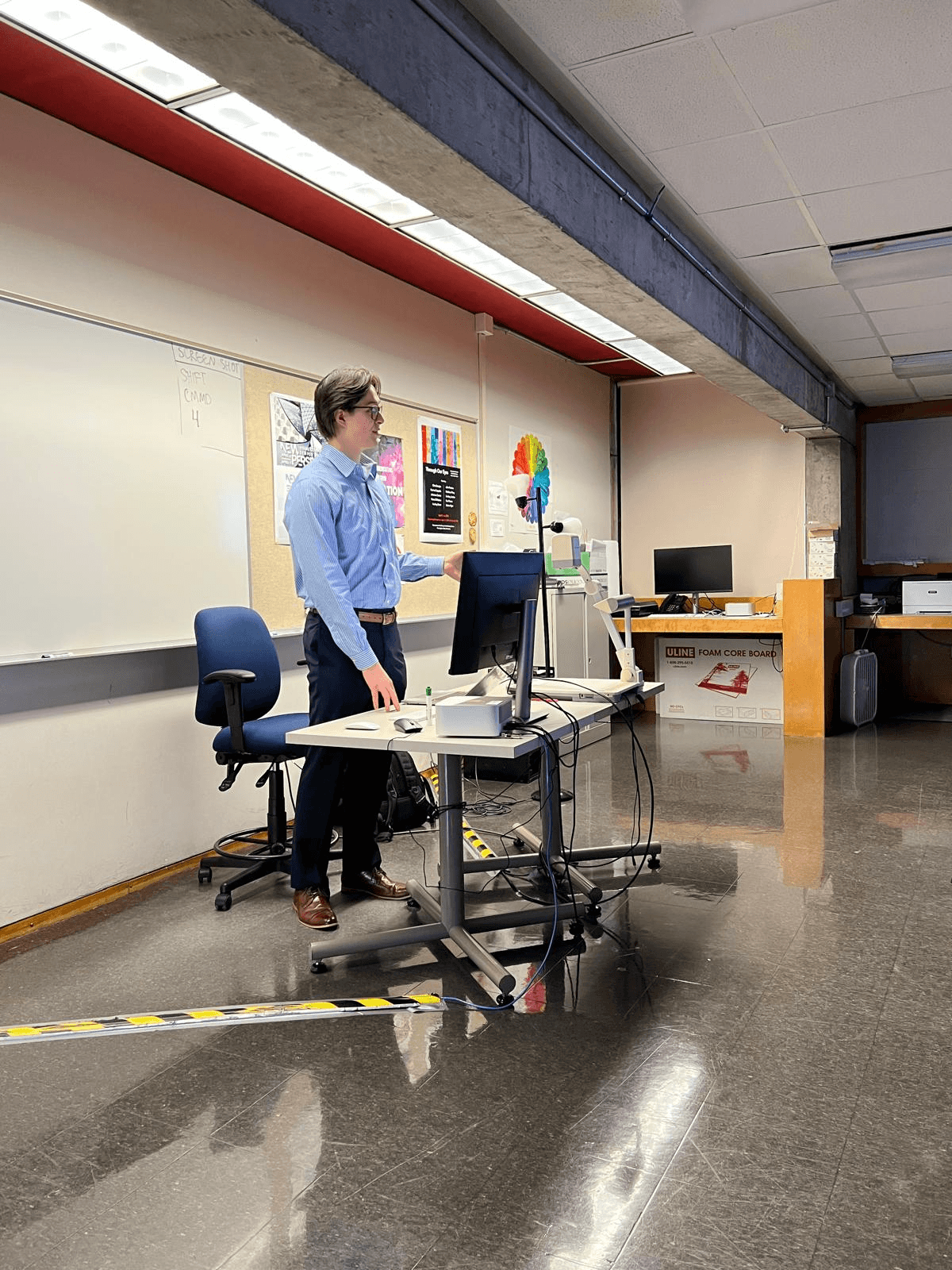
In October 2025, I had the opportunity to guest lecture for an introductory UX research class at NYU, teaching six undergraduate students about the research methods and design techniques I've used throughout my internships. The two-hour workshop was structured around a core insight I wanted to share with these UI-focused students: that UX research fundamentally shapes and improves design decisions. I opened by introducing myself and walking through my background, then dove into the different types of UX research methods, breaking down the distinction between qualitative and quantitative approaches and when to use each. Drawing from my real-world experience, I covered three research methods I've relied on professionally: competitive research from my time at Thorsun, usability testing from my work at Willkie, and user interviews from my internship at Beyer Blinder Belle where I conducted power-user interviews that directly informed the design system I built. The highlight of the research portion was an interactive 'Good vs. Bad Question' workshop where I presented ten interview questions (a mix of leading, closed-ended, hypothetical, and well-crafted open-ended questions) and facilitated a class discussion identifying what made each effective or problematic. We collaboratively rewrote the weak questions and practiced writing interview questions from scratch, which helped students understand the nuance of asking non-leading, experience-focused questions. After a break, we shifted to Figma, where I lectured on prototyping and design systems. I explained why prototyping matters for designers to think through flows, for stakeholders to understand intent, and for researchers to test interactions before code is written. For the hands-on portion, I led a structured follow-along prototyping session where students built three common interaction patterns: a product card-to-cart flow, an image gallery carousel, and expandable accordion components. The session was highly interactive, and what made it particularly rewarding was seeing students realize how research findings translate directly into design decisions. By the end, I'd not only taught practical skills but hopefully instilled a mindset shift about approaching design with curiosity and user empathy rather than jumping straight to visual solutions.
The Lecture Slides
Enjoying this post?
Posted by
Henry Osterweis
Designer & Developer

On this page
2026 Henry Osterweis
How's my portfolio?
😔
🙂
😊